Showing posts with label Wolf. Show all posts

Saturday, June 19, 2010

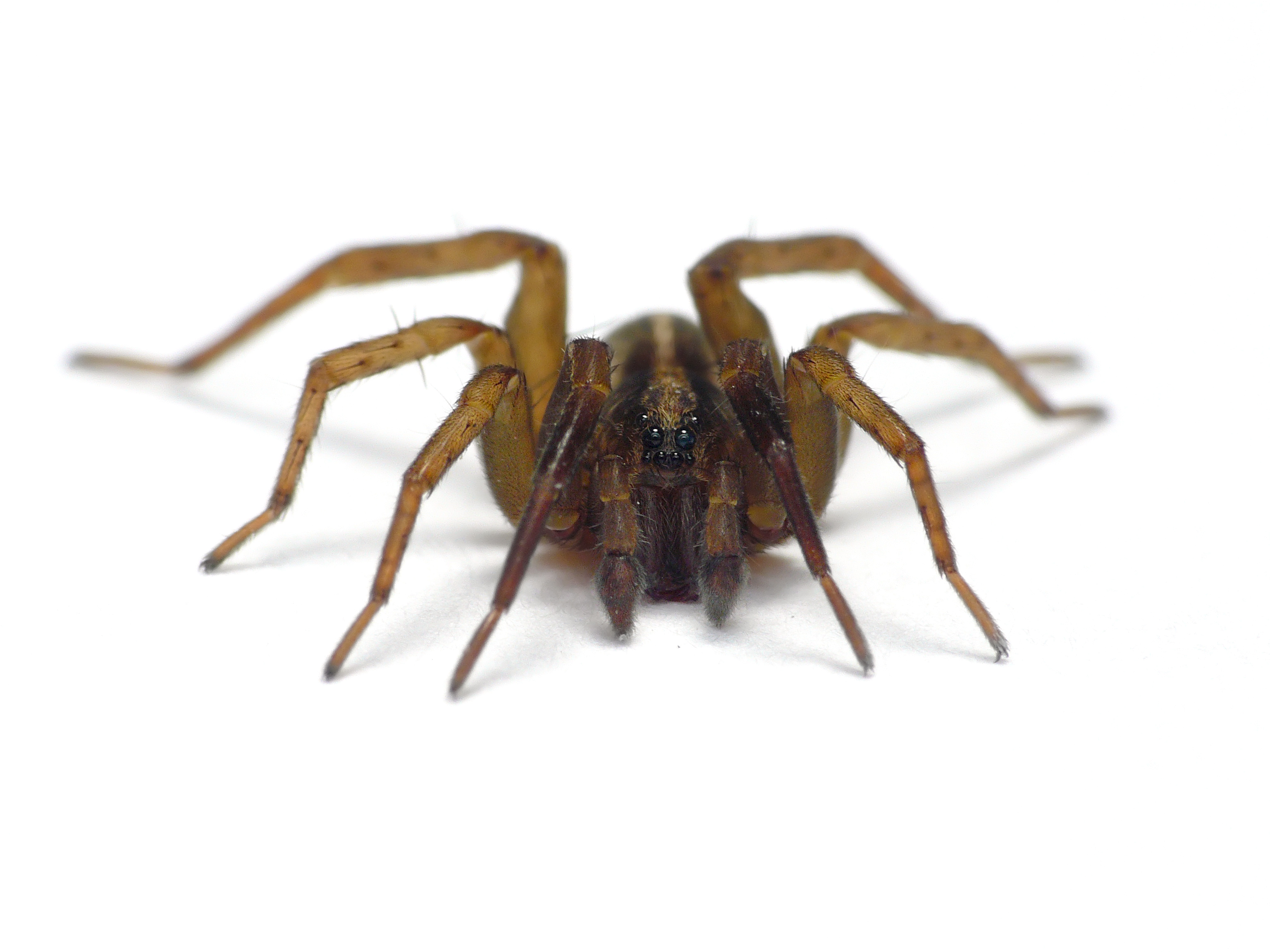
Wolf Spider (Hogna helluo)

click for large

This is Hogna helluo. It is the second largest species of wolf spider in the United States. I've been looking for one of these for the longest time, and today while I was out fossil hunting, I found one. This gal was about the size of a half dollar, about an inch and a half in diameter, including legs. Definitely the largest wolf spider I have ever seen.

The carapace of Hogna helluo is characterized by a clearly defined medial stripe from a point between the middle pair of eyes nearly to the point at which the carapace joins the abdomen. The abdomen has a broader light stripe with a darker narrow and tapering form like the head of a lance or a stone arrow point. The underside of the cephalothorax is solid black, but the underside of the abdomen may be spotted with lighter colored patches.

This species does not dig tunnels but may create shelters under rocks and similar natural features. H. helluo frequently enters houses with the arrival of lower temperatures in autumn. They are inside only in search of warmer temperatures and make every possible effort to stay away from people.

Raynox DCR-150 mounted on my Panasonic FZ8.

Tuesday, May 18, 2010

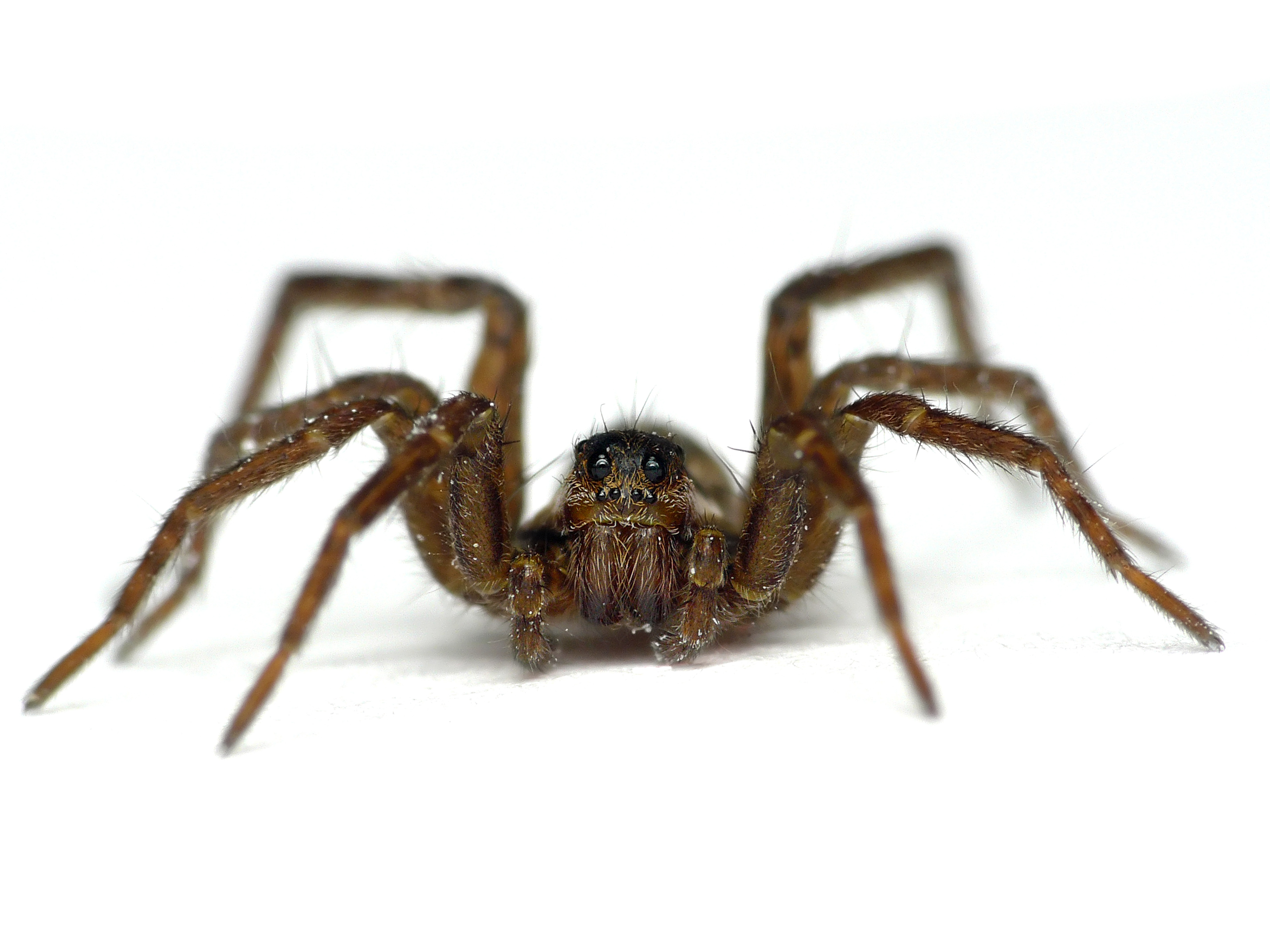
Wolf Spider (Trochosa terricola)

click for large

I found this spider cleaning out some of the brush alongside my garage. It was a fairly large specimen, about 3/4" in diameter. It was also a fair bit slower than the normal wolf spiders I run into. I would almost say it moved at a lumbering pace. It didn't seem very afraid of me, or particularly aggressive either.

Wolf spiders are members of the family Lycosidae. They are robust and agile hunters with good eyesight. They live mostly solitary lives and hunt alone. Some are opportunistic wanderer hunters, pouncing upon prey as they find it or chasing it over short distances. Others lie in wait for passing prey, often from or near the mouth of a burrow.

Their eyes reflect light well, and one method of finding them is to hunt at night using a flashlight strapped to one's forehead so that the light from the flashlight is reflected from their eyes directly back toward its source. This is also especially helpful because the wolf spiders are nocturnal and will be out hunting for food, making it easier to find them.

Because they depend on camouflage for protection, they do not have the flashy appearance of some other kinds of spiders. In general their coloration is appropriate to their favorite habitat.

Raynox DCR-250 mounted on my Panasonic Lumix FZ8

Friday, April 16, 2010

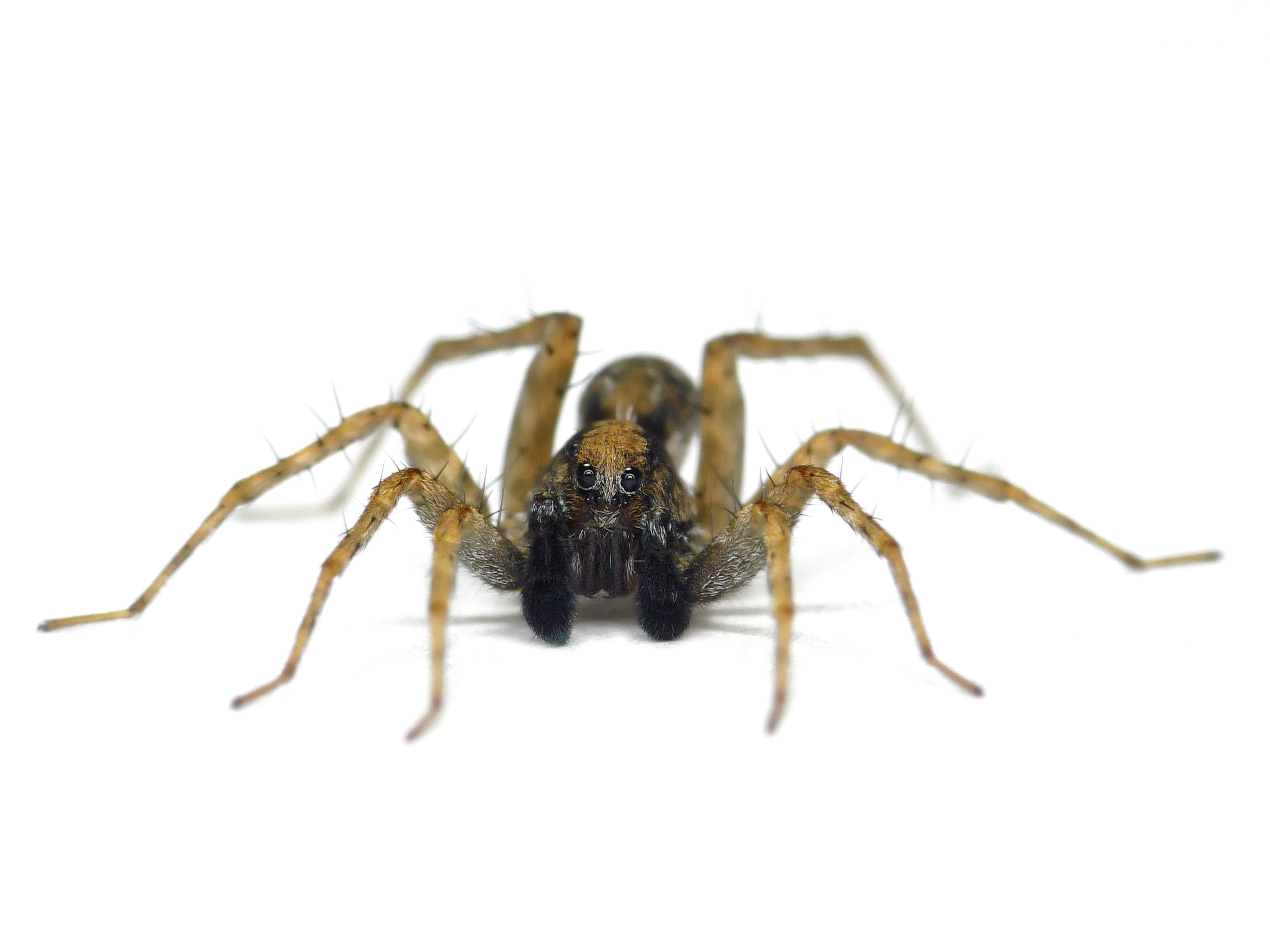
Wolf Spider (Pardosa sp.)

click for large

Pardosa sp., are also known as Thin-Legged Wolf Spiders. This is a female I caught near my watering hose. It was a fair bit larger than the male I caught earlier, probably twice as large. You can compare this female to a male I caught earlier here. Notice how the male has big black furry palps.

Like all Wolf Spiders they are robust and agile hunters with good eyesight. Check out the eyes on this guy. Wolf spiders can be found in a wide range of habitats both coastal and inland. These include shrublands, woodland, wet coastal forest, alpine meadows, and suburban gardens. Spiderlings disperse aerially and consequently wolf spiders have wide distributions. Although some species have very specific microhabitat needs (such as stream-side gravel beds or montane herb-fields) most are wanderers without permanent homes. Some build burrows which can be opened or have a trapdoor. Arid zone species construct turrets or plug their holes with leaves and pebbles during the rainy season to protect themselves from flood waters.

Raynox DCR-150 and Raynox DCR-250, stacked and mounted on my Panasonic
Lumix FZ8.

Tuesday, April 13, 2010

Wolf Spider (Pardosa sp.)

click for large

Pardosa sp, are also known as Thin-Legged Wolf Spiders. I find they are very common along lake shores, which is where I caught this guy. There were literally dozens of these guys running around. Very, very fast. I initially thought they were jumping spiders, because none of them ran, they all jumped in 2-3" increments. This is a male, you can tell by the large furry black palps.

Like all Wolf Spiders they are robust and agile hunters with good eyesight. Check out the eyes on this guy. Wolf spiders can be found in a wide range of habitats both coastal and inland. These include shrublands, woodland, wet coastal forest, alpine meadows, and suburban gardens. Spiderlings disperse aerially and consequently wolf spiders have wide distributions. Although some species have very specific microhabitat needs (such as stream-side gravel beds or montane herb-fields) most are wanderers without permanent homes. Some build burrows which can be opened or have a trapdoor. Arid zone species construct turrets or plug their holes with leaves and pebbles during the rainy season to protect themselves from flood waters.

Raynox DCR-150 and Raynox DCR-250, stacked and mounted on my Panasonic Lumix FZ8.

Friday, April 2, 2010

Wolf Spider (Hogna sp.)

click for large

Hogna are a genus of Wolf Spiders with more than 200 described species. They are found on all continents except Antarctica. Two species of Hogna, Hogna carolinensis and Hogna helluo, are among the largest spiders in the US. Too bad, but this wasn't one of them.

I found this guy in my flower garden. It was pretty small, given that it's very early in the season, about what I'd expect.

You can tell this is a Hogna species because of the eye pattern. Wolf spiders are most readily identified by their eye patterns. If you look really closely you can see a small horizontal row of four eyes, then a set of two larger eyes above that row, then another set of two on top of the carapace. Thats the hallmark of a Hogna sp. spider.

Raynox DCR-150 and Raynox DCR-250, stacked and mounted on my Panasonic Lumix FZ8.

Friday, July 31, 2009

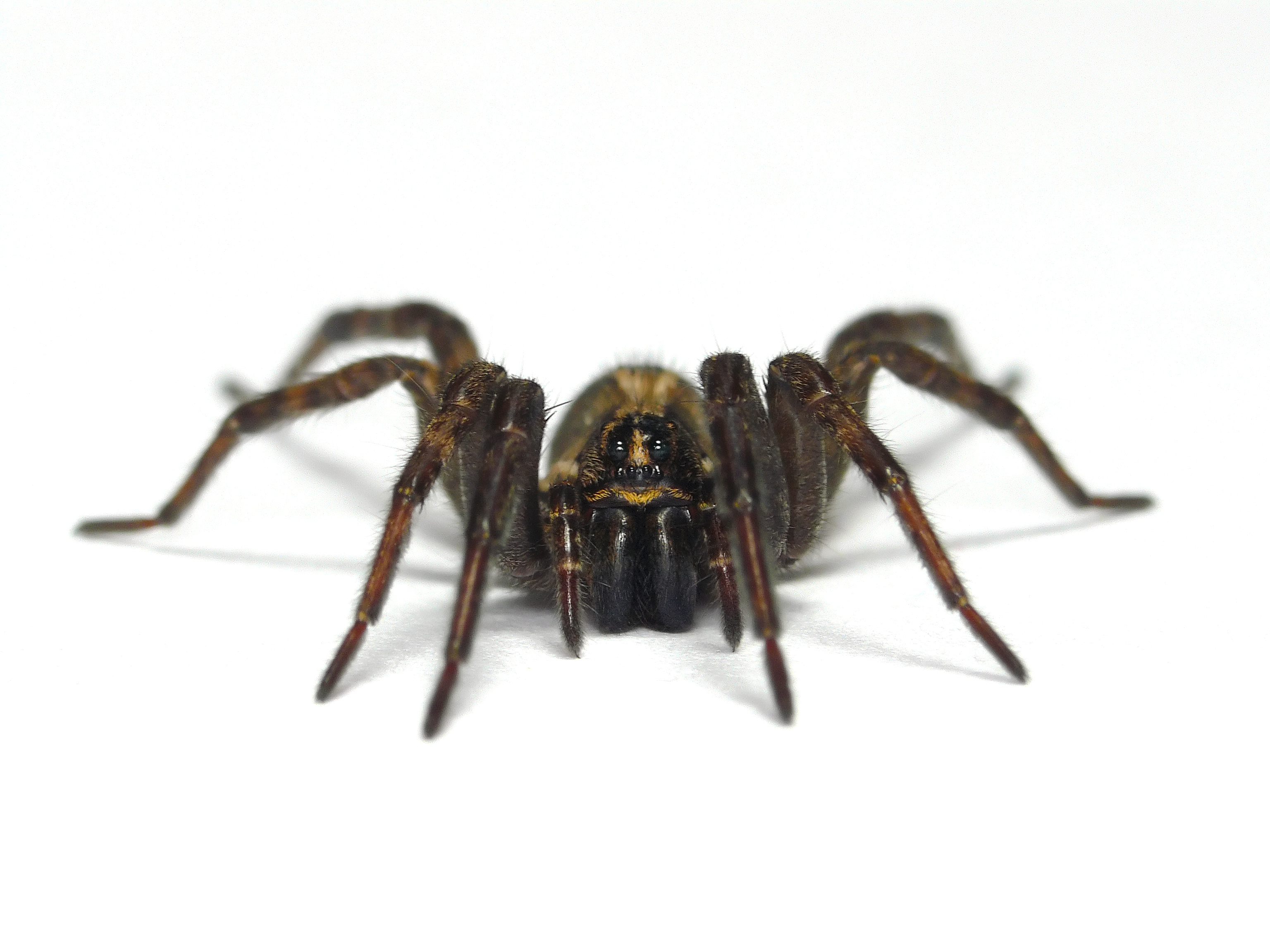
Wolf Spider (Hogna frondicola)

click for large

Hogna are a genus of Wolf Spiders with more than 200 described species. They are found on all continents except Antarctica. Two species of Hogna, Hogna carolinensis and Hogna helluo, are among the largest spiders in the US. Too bad, but this wasn't one of them.

I found this guy on my garage. It was a little larger than the normal Pardosa sp. I run into, around an inch in diameter.

You can tell this is a Hogna species because of the eye pattern. Wolf spiders are most readily identified by their eye patterns. If you look really closely in a bigger size you can see a small horizontal row of four eyes, then a set of two larger eyes above that row, then another set of two on top of the carapace. Thats the hallmark of a Hogna sp. spider.

Raynox DCR-150 and Raynox DCR-250 stacked and mounted on my Panasonic Lumix FZ8.