Showing posts with label female. Show all posts

Saturday, July 10, 2010

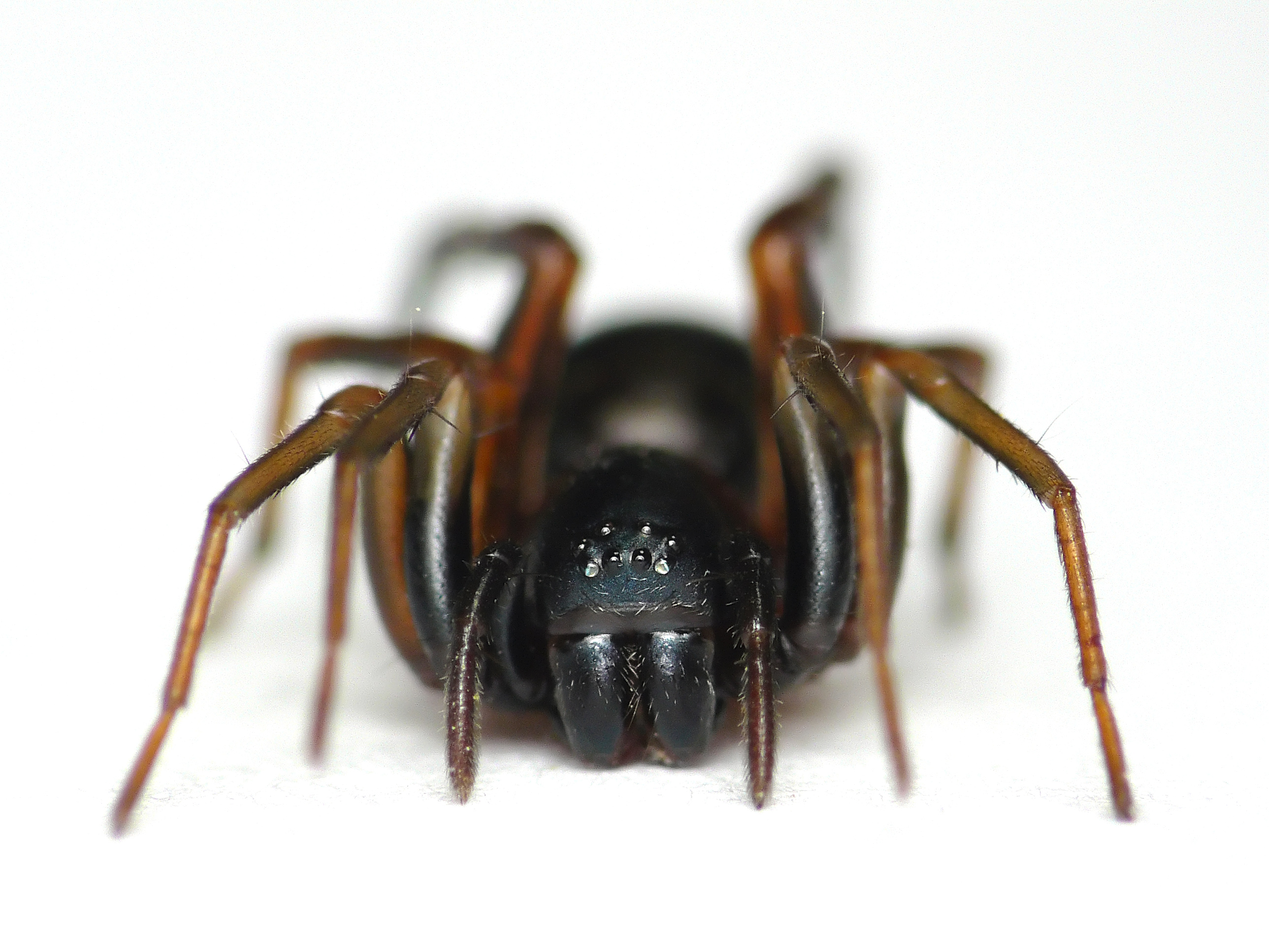
Two Banded Ant Mimic (Castianeira cingulata)

click for large

While out fossil hunting today I happened upon this gal. While it doesn't look it from this angle, from above it looks just like a Carpenter Ant. It moves along slowly and purposefully like any other ant, except this is a spider.

Members of the genus Castianeira are considered mimics of large ants, such as carpenter ants, and mutillid wasps, which are known as “velvet ants.” These spiders purposely walk about slowly the way ants do and then only move fast when disturbed. Many times they even raise their front two legs to mimic ant antennae.

These spiders mimic ants for several reasons. Many birds or predators that rely on sight to hunt, don't hunt ants because they are typically distasteful or aggressive. Ant mimics may also use their camouflage to hunt ants. A wolf in sheep's clothing!

Raynox DCR-250 mounted on my Panasonic Lumix FZ8.

Saturday, May 1, 2010

Female Triangulate Cobweb Spider (Steatoda triangulosa)

click for large

The adult female Triangulate Cobweb Spider is 1/8 to 1/4 inch long, with a brownish-orange cephalothorax and spindly, yellowish legs. The round, bulbous abdomen is creamy in color, with parallel purply-brown zigzag lines running front to back. This distinctive pattern sets it apart from other Theridiids in its area.

The triangulate cobweb spider is known to prey on many other types of arthropods, including ants (including fire ants), other spiders, pillbugs, and ticks. It preys on several other spiders believed to be harmful to humans, including the hobo spider and the brown recluse.

The egg sac of the triangulated cobweb spider is made from loosely woven silk, and is about the same size as the spider itself. Each egg sac contains approximately 30 eggs.

In common with other members of the Theridiidae family, S. triangulosa constructs a cobweb, i.e. an irregular tangle of sticky silken fibers. As with other web-weavers, these spiders have very poor eyesight and depend mostly on vibrations reaching them through their webs to orient themselves to prey or warn them of larger animals that could injure or kill them. They are not aggressive. Other, larger members of the Steatoda genus do have medically significant bites, but there are no recorded bites or envenomations by this spider.

S. triangulosa is a cosmopolitan species, and is found in many parts of the world, including much of North America, southern Russia, New Zealand and Europe. The spider is believed to be native to Eurasia. This species is primarily a house spider, and builds webs in dark corners of buildings and other man-made structures.

Raynox DCR-250 mounted on my Panasonic Lumix FZ8.

Thursday, August 6, 2009

Female Common House Spider (Parasteatoda tepidariorum)

click for large

A Female Common House Spider (Parasteatoda tepidariorum). A male of the species is posted above. Notice how large and bulbous the female abdomen is. Also notice the small palps.

They are generally dull in appearance, with patterns consisting of brown shades for coloration, often giving a vague spotted appearance that is particularly noticeable on the legs. Their average body size is a quarter-inch long, but they can be an inch or more across with legs outspread. These traits combined allow the spiders to blend into the background and escape notice.

Like some other species of the family Theridiidae, P. tepidariorum shares a body shape and size that makes it similar to widow spiders, which have venom that is classified as potentially dangerous.

These spiders are not aggressive. They are not known to bite people frequently, nor is their venom known to be dangerous to human beings. When removed from their webs their poor vision and bulbous abdomen renders them nearly helpless. Their only concern seems to be to find and return to their own web or build another one. They do not wander around inside houses except to find a secure place to build a web. Since these spiders are harmless and their diet consists of pests such as flies and mosquitos, as well as other small invertebrates found in houses, tolerating their presence in human homes is beneficial.

Raynox DCR-150 and Raynox DCR-250, stacked and mounted on my Panasonic Lumix FZ8.

Friday, July 31, 2009

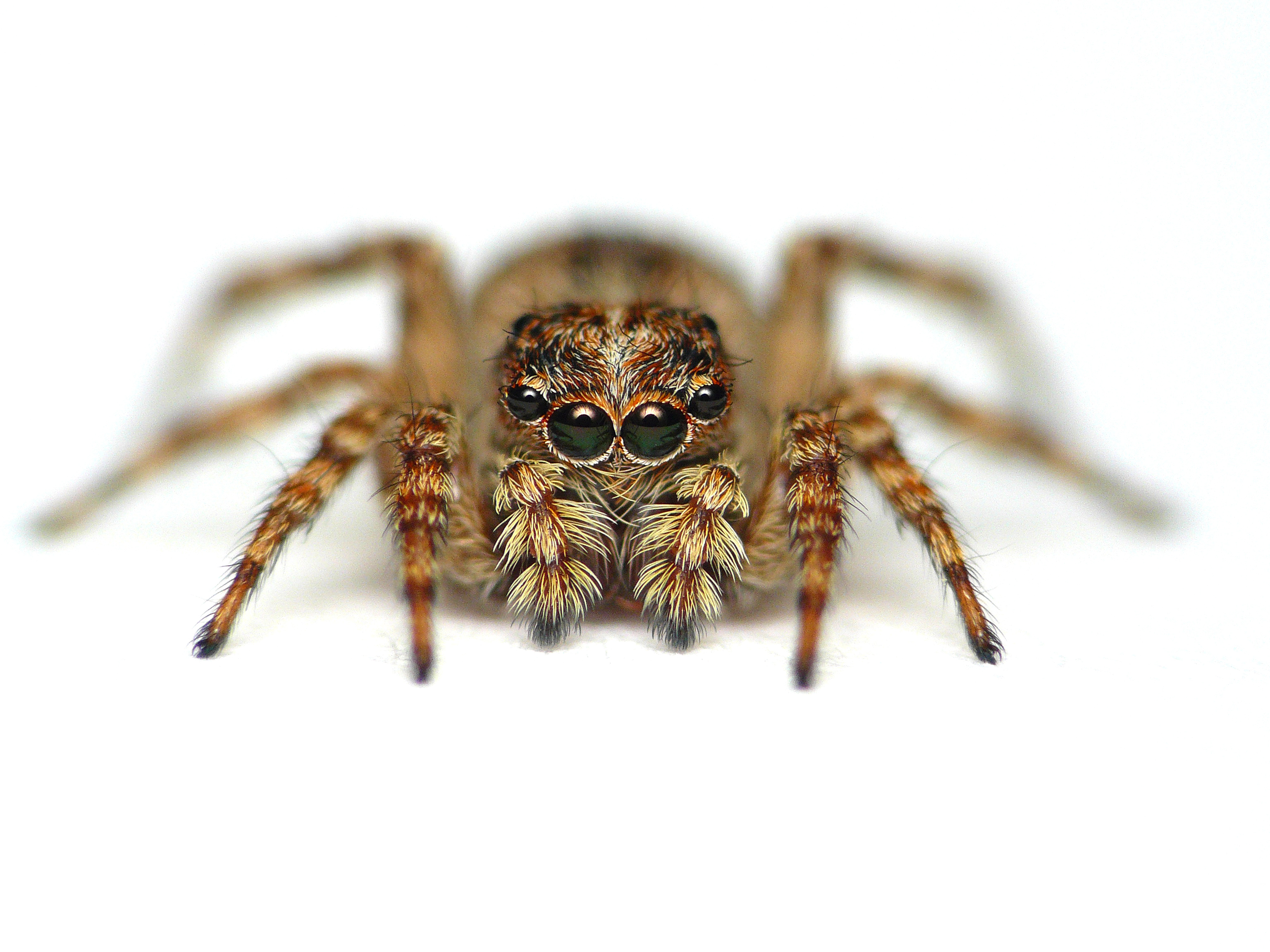
Female Jumping Spider (Sitticus fasciger)

click for large

I was snooping around outside of the house today looking for something to shoot in my little studio, and I found three of these gals. This is a female Sitticus fasciger, the males have smaller, more slender abdomens, and larger, very much less furry, black palps. For an informative paper on behavior and identification of this species, look here.

Sitticus fasciger is originally from Asia, specifically the Russia/China area. They are almost always found in conjunction with man. Their favorite habitats are manmade structures like stone walls, houses, building walls and such, which is exactly where I found this girl. They were apparently introduced into the US in the 50's.

Raynox DCR-150 and Raynox DCR-250 stacked and mounted on my Panasonic Lumix FZ8.